
Maximizing your Return on Ad Spend (ROAS) is a critical goal for any marketer running social ads. But have you ever wondered if InApp browsers are reducing your conversions? When users click on ads within social platforms, the content typically opens in the platform’s InApp browser, which often provides a suboptimal experience.
In this blog, we’ll explore how redirecting users from InApp browsers to native browsers with InApp Redirect can improve user experience, boost conversions, and significantly enhance your ROAS.
If you want to understand the hidden reason Meta ads underperform, our blog on How to Increase Meta Ads Conversions breaks down how in-app browsers silently kill ROAS.
The Problem with InApp Browsers
InApp browsers (embedded within social apps like Facebook, Instagram, Twitter, TikTok etc) often hinder user experience in various ways:
- Slower Load Times: InApp browsers typically load web pages more slowly than native browsers, leading to higher bounce rates.
- Limited Features: Users lose essential functionalities like password autofill, multiple tabs for comparing products, and customization options.
- Impaired Tracking: Analytics tools and conversion pixels may not work as well in InApp browsers, leading to inaccurate tracking and reduced attribution.
- No Buy Later Option: Once the user decide to quit your Ads and start scrolling again, it's nearly impossible to find your Ads or website again inside InApp Browsers.
As a result, users may abandon the purchase process, hurting both your conversion rate and your overall ROAS.
Most social media users are there to scroll, and not to shop, which means your ads have less than 2 seconds to catch their attention. But here's the real catch: when they finally click, your website opens in the app's built-in browser. This is where you start losing them. Without the option to switch to their trusted Chrome or Safari browser, where their info is saved for quick and seamless checkout, you're making the buying process harder. And if they decide to think it over? In-app browsers don’t support cookies, so their cart will vanish. No "buy later," no second chances. Don’t miss the opportunity—give them the option to buy where it counts, or risk losing the sale forever.
For a deeper breakdown of why these app-embedded inapp browsers reduce conversions, see our full analysis: Why In-App Browsers Are Killing Your Meta Ads Conversions.
The Solution: Redirecting to Native Browsers with InApp Redirect
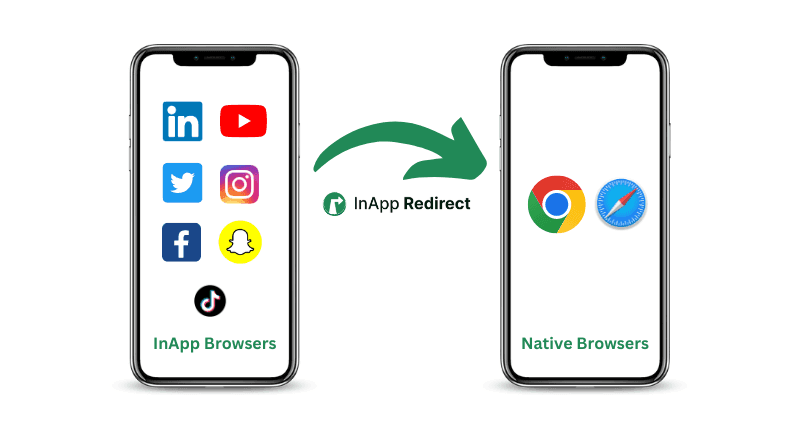
The solution to this problem lies in redirecting users to their native browsers with InApp Redirect, a tool designed to offer seamless redirection. When users click on your social ads and land in an InApp browser, InApp Redirect automatically redirects them to their native browser, providing a faster, more reliable browsing experience.
Key benefits of using InApp Redirect
- Better User Experience: Native browsers allow users to browse at faster speeds, enjoy personalized settings, and take advantage of pre-filled forms like saved passwords. This improves user satisfaction and reduces friction, which can lead to higher conversions.
- Accurate Tracking: Redirecting to native browsers ensures that your tracking pixels and cookies work properly, offering more accurate data for campaign analysis.
- Increased Trust: Many users trust their native browsers more due to advanced security features, making them more likely to complete purchases.
By using InApp Redirect, you’re not only improving user experience but also gaining more precise insights into the effectiveness of your campaigns.
How to Redirect Users From InApp Browsers to Native Browser using InAppRedirects?
When it comes to redirecting users from InApp browsers to native browsers, InApp Redirect provides an easy and efficient solution. It automatically detects when users are browsing within an InApp browser and seamlessly transitions them to their preferred native browser. This process is entirely frictionless, ensuring that the user journey remains uninterrupted and smooth.
Ready to enhance your social media ads campaigns? Book a demo today and discover how InApp Redirect can help you increase your conversions and ROAS.
If you want to understand different real-world use cases where native browser redirects significantly improve ROAS, check out our In-App Browser Redirection Use Cases.
Why Native Browser Redirects Improve ROAS?
Redirecting users to their native browser through InApp Redirect can result in multiple benefits for your ad performance:
- Higher Conversions: Native browsers provide a better experience, allowing users to engage with your site more easily. This leads to fewer drop-offs and more completed actions (e.g., form submissions, purchases).
- Enhanced Tracking Accuracy: When users are redirected to native browsers, tracking tools can properly capture their activity. This data is critical for making informed optimization decisions and attributing conversions correctly.
- Increased User Trust: Native browsers provide a sense of familiarity and security to users, making them more likely to trust your website and follow through on transactions.
- Lower Bounce Rates: Users are less likely to abandon your page when they are in an environment that loads quickly and offers a smooth browsing experience.
Want to see these results for yourself? Get started with InApp Redirect for free and watch your ROAS improve!
Conclusion
InApp browsers may be negatively affecting your social ad campaigns more than you think. By leveraging InApp Redirect to seamlessly transition users from InApp to native browsers, you can unlock higher conversions, better tracking, and a boost in ROAS.
Don’t let InApp browsers hold back your performance. Get started with InApp Redirect today, and take your social ad campaigns to the next level!
Recommended Reads
How to Bypass Facebook’s In-App Browser – Fix conversion drop for Facebook ad clicks.
How to Bypass Instagram’s In-App Browser – Improve funnel performance for Instagram ad traffic.
How to Open Links in the Default Mobile Browser – Technical how-to guide.
Security of In-App Browsers: What You Need to Know – Understand the security risks, privacy limitations, and tracking restrictions inside in-app browsers.
Written by
About the author

Shubham Saurabh
Connect on LinkedInShare this article
Found it useful? Pass it along.