
As a performance marketer, optimizing every step of the user journey is crucial for driving conversions. When social ad clicks or campaign links open in an in-app browser, they often lead to poor user experiences, causing higher bounce rates and missed conversion opportunities. Redirecting links to the mobile device’s default browser can be a game changer, ensuring better performance and trust. In this blog, we explore how making this shift can significantly enhance user experience, improve conversion rates, and provide more reliable tracking.
If you want to understand the deeper reasons around why in-app browsers hurt conversions, this breakdown on Why In-App Browsers Are Killing Your Conversions explains the hidden friction they create inside Meta and Instagram campaigns.
For a broader perspective on browser behavior, we recommned reading our comparison: What Is the Difference Between In-App Browsers and Default Browsers?.
Why In-App Browsers Hurt Social Ads Performance and ROAS?
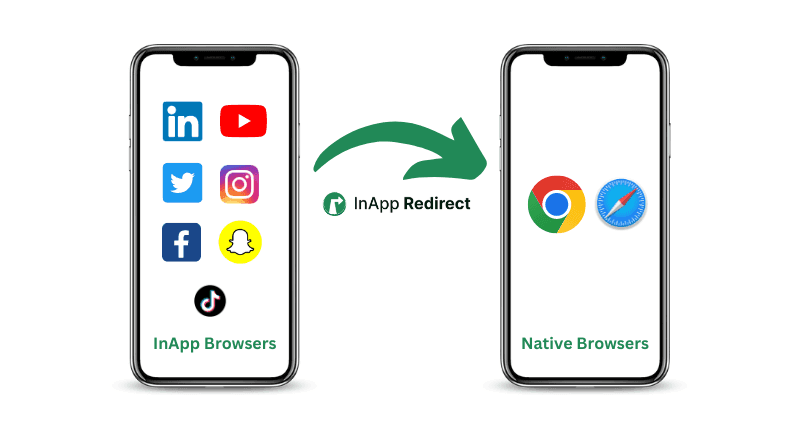
In-app browsers open links within social media platforms or apps like Facebook, Instagram, and Twitter etc. While convenient for keeping users within the app, they have several downsides that directly affect your marketing efforts:
- Slower Load Times: Users are accustomed to fast browsing. The delay in page load times within in-app browsers often leads to higher abandonment rates.
- Limited Features: In-app browsers don’t offer users the benefits they’re used to, such as saved passwords, bookmarks, multiple tabs, buy later cart discovery, or autofill forms. These limitations can disrupt their buying process.
- Tracking and Attribution Issues: Conversion tracking and analytics tools may not work properly within in-app browsers, leading to inaccurate data on user actions and ineffective optimization of ad spend. No cookies can be stored inside an InApp browser. Sad, isn't it?
This challenge is even more evident when running Meta ad campaigns. Here’s a detailed guide on How to Increase Meta Ads Conversions by fixing the browser environment where users land.
Auditzy’s real-user data findings also align with our Instagram-focused deep dive here: How to Bypass Instagram’s In-App Browser, where load times were 15% slower inside WebViews.
How Native Browsers Improve Campaign Performance?
Opening links in the default browser ensures a more seamless user experience. Here’s why this shift is crucial for performance marketers:
- Enhanced User Experience: Native browsers are optimized for speed and provide a trusted environment. Users can navigate faster, compare products, or fill out forms without friction, leading to higher conversion rates.
- Improved Tracking and Data Accuracy: Accurate data is the foundation of any successful marketing campaign. Native browsers ensure proper cookie implementation and tracking, giving you clear insights into user behavior and campaign performance.
- Trust and Security: Users feel more confident entering sensitive information (like payment details) in familiar, secure environments such as Chrome or Safari. This trust directly correlates with better engagement and higher conversion rates.
Facebook’s WebView behaves similarly. This guide on Bypassing Facebook’s In-App Browser shows how tracking becomes unreliable inside the FB In-App Browser.
Best Practices for Performance Marketers
For performance marketers, ensuring that links open in the default browser can greatly impact ad performance and ROAS. Here are some best practices to consider:
- Implement InApp Redirect: Provide an “Open in Browser” option where possible, giving users control over their browsing experience.
- Monitor Performance Metrics: After implementing native browser redirects, track key metrics like click-through rates (CTR), bounce rates, and conversion rates. This will allow you to measure the impact of the change and adjust campaigns accordingly.
- Test for Consistency: Ensure that links across different channels (social media, email, or SMS) consistently open in the default browser for a smooth user experience.
If you’re evaluating different solutions, our In-App Browser Redirection Use Cases will help you understand which flows benefit the most from opening links externally.
To understand the privacy concerns around in-app browsers, read our detailed post: Security of In-App Browsers — What You Need to Know.
Conclusion
For performance marketers focused on maximizing ROAS and improving the user journey, ensuring that campaign links open in the default mobile browser of buyers is a simple but powerful strategy. By redirecting users away from in-app browsers, you create a seamless, secure, and engaging experience that drives higher conversions and offers more reliable tracking.
It’s time to move beyond the limitations of in-app browsers. Start implementing native browser redirects today with InApp Redirect for fee to boost your campaign performance and maximize your ad spend.
If you want to see how the solution works end-to-end, visit our InApp Redirect Homepage for features, setup documentation, and demo access.
Written by
About the author

Shubham Saurabh
Connect on LinkedInShare this article
Found it useful? Pass it along.